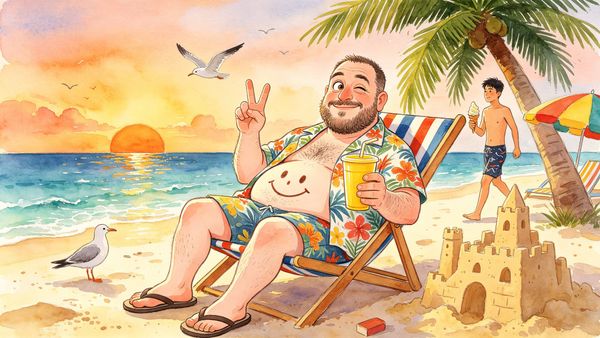
Bonus Episode I: The Gay Lord
As I Wish – Side Story (15 Min Read) When necessary, hatred is far more powerful than love.


This is not a typical coming-of-age story about a gay man. There are no clichéd plots of coming out, identity crises, or forbidden love.
Only the truth, the truth of real life, the truth of real history, and the truth of real society.
One summer afternoon, as Will sat beneath a towering phoenix tree with a book in his hands, an unexpected realization struck him like lightning: he liked men.
So I must be one of those—what they call—homosexuals, he thought, about three months after his twelfth birthday.
Not once, not even for a single moment, did he feel doubt, confusion, or shame about his sexuality, for right in the next moment, a thought rose from the abyss of his mind: it doesn’t matter.
To Will, it was like stepping into a game and realizing, Oh, my assigned weapon is a rare spear instead of the common sword, so what? The point of this game we call life is to win—and to enjoy playing it—not to obsess over how your equipment differs from everyone else’s.
If anything, he was grateful to have been born Chinese. Unlike countries that weaponized religion against people’s private relationships, China’s millennia-old civilization had left behind countless stories of same-sex love. All one had to do was open a book—like the one resting in his hands.
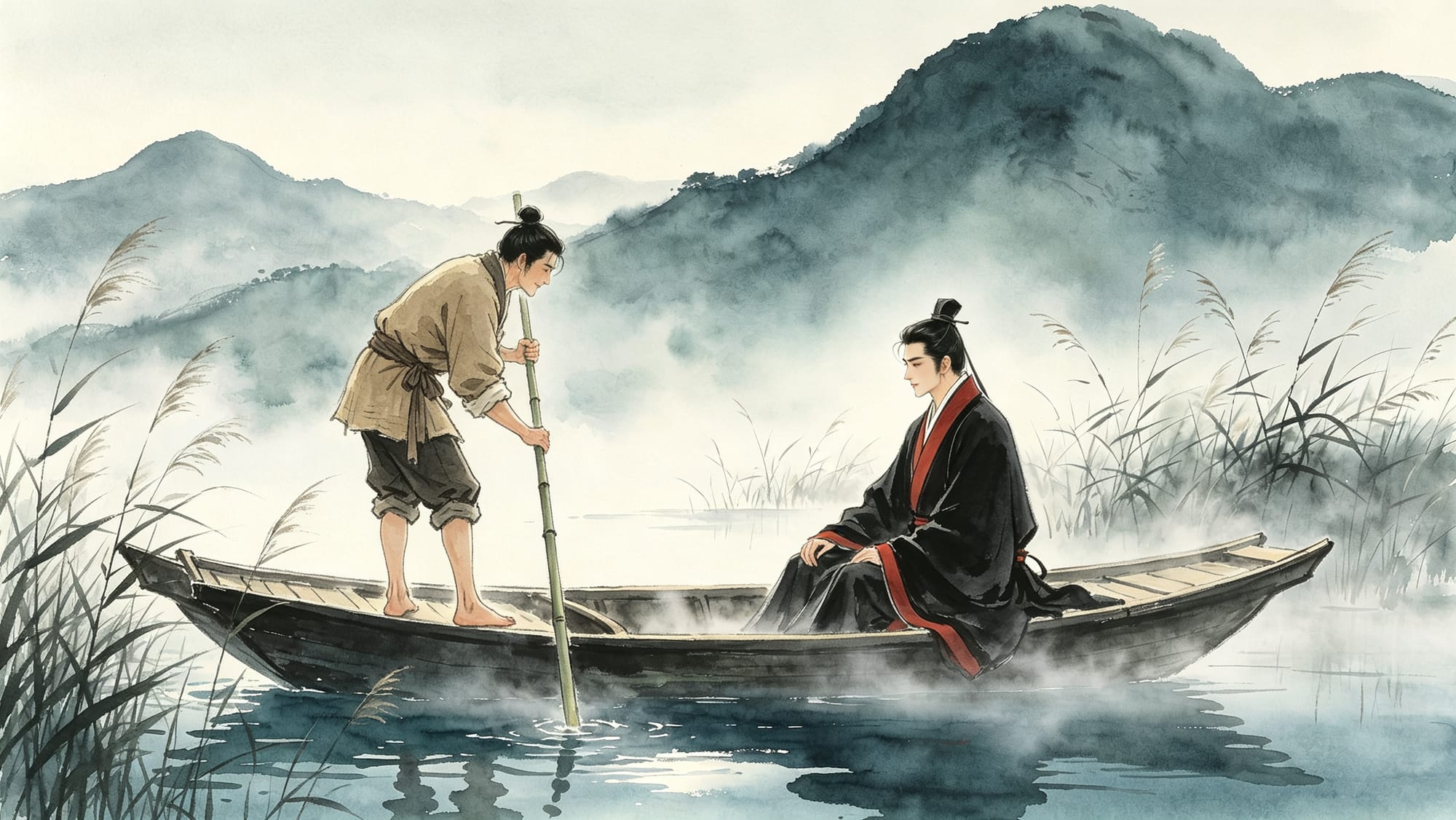
Read the poem Yue Ren Song. A boatman sang to the prince he loved. Delicate and beautiful, it was written during the Spring and Autumn period, six hundred years before Jesus Christ was born.
Read the chronicles of emperors and their beloved companions—who happened to be men. Take the Han dynasty. Nearly every Han emperor is recorded as having had male favorites. The most celebrated among them was Emperor Wu. While Roman men were exchanging flirtatious glances in public bathhouses, Emperor Wu was resting in the embrace of his many male lovers.
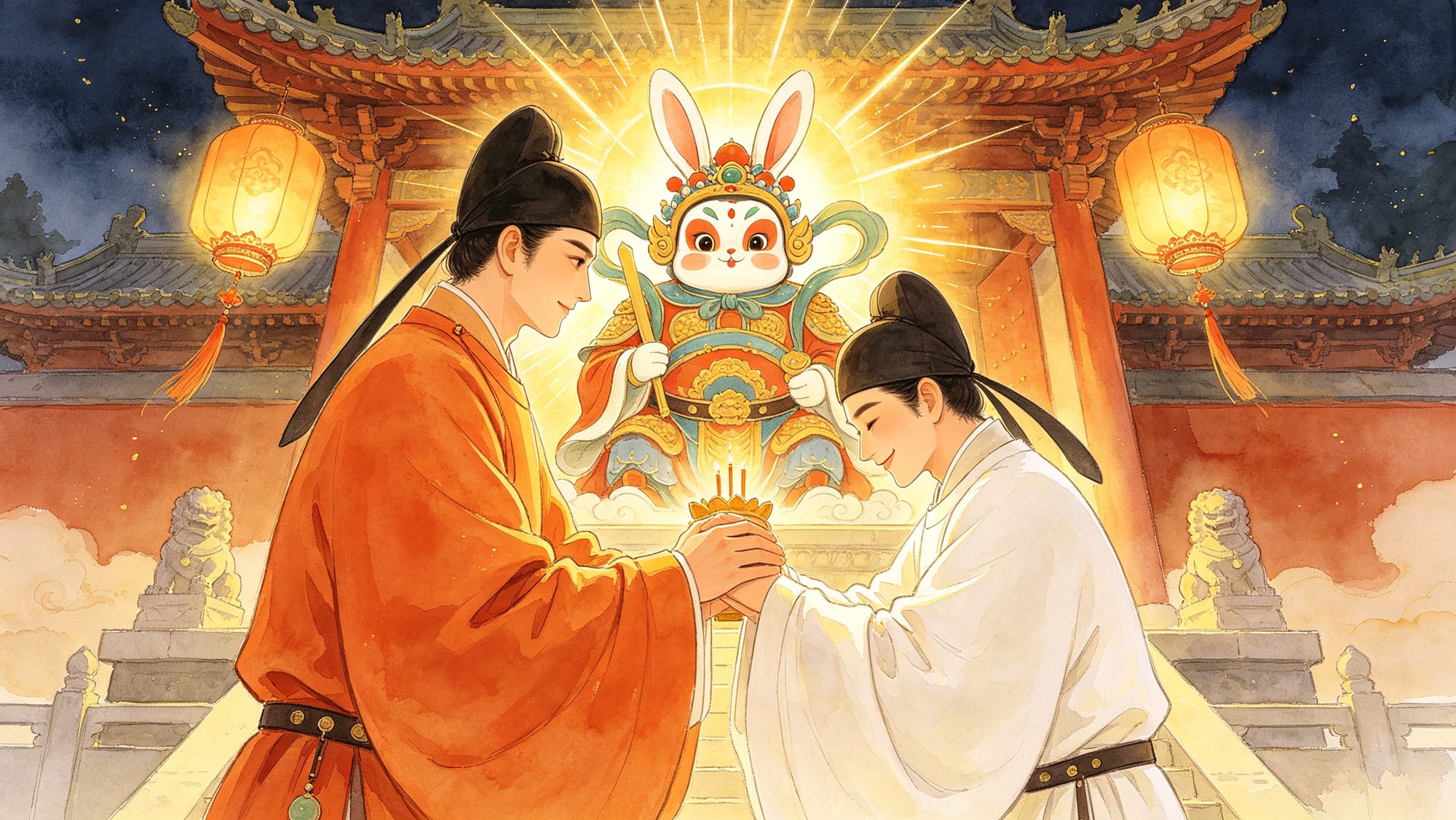
Read the romances of the Ming and Qing dynasties. While in the Far West, Europe knelt before Christianity and condemned same-sex love as a crime punishable by hanging, burning, or exile, young men in Fujian entered relationships that were half brotherhood, half marriage. Before the Rabbit God, they vowed to love one another for life—and, if necessary, to die for one another. In the same town, the celebrated painter, poet, and aristocrat Zheng Banqiao was found lamenting to a friend that he witnessed the beautiful, smooth white buttocks of a handsome young man ruined by a judicial flogging—only to complain, in the very next breath, that young men nowadays courted him only for his money.
Same-sex love appeared throughout Chinese history as naturally as eating, drinking, or sleeping. It was so common, so ordinary, and entirely unremarkable. Anyone who read Chinese history and literature could hardly miss it. So if a Chinese person does not recognize or appreciate same-sex love, that person must be an uncultured, uneducated, unsophisticated lowlife.
Yes, a person’s view of homosexuality was one of the ways he viewed a person.
“Only straight is normal.”
“I don’t discriminate gay people. I really don’t.”
“You like men, right? So you must like me!”
Anyone who had ever uttered anything along those lines would be immediately dropped into his “human trash bin,” which means they would be forever shut out of his real life and treated merely like extras in a movie, NPCs in a game, cannon fodder on a battlefield. Nothing more.
To the teenage Will, homosexuality itself was never the issue. Growing up in China was more like surviving The Hunger Games than standing trial for one’s sexual orientation. China’s harsh, Spartan environment had one advantage: as long as you finished at the top of the class, teachers and parents alike would leave you alone. The real challenge was navigating the mediocrities around him during his school years, when humanity’s most primitive instincts—ignorance, cruelty, and impulsiveness—were at their peak.
Faggot. Tranny. Eunuch… He heard every slur there was—the Chinese versions, of course.
His exercise books were always torn by someone.
Somebody poured salt into his water bottle.
When he finished practicing a speech in class, no one applauded.
……
Yet he didn’t care.
He smoothed the crinkled pages and taped them back together.
He spat out the salty water and sneered loudly, “Childish!”
He walked off the podium, head held high, leaving them to choke on their own jealousy.
Amid the crossfire of fate, agonizing over whether you liked men or women seemed painfully juvenile. He knew exactly what mattered: to outrun those suckers, one by one, in the race of life. I’m in this classroom because I intend to win the brutal competition ahead—not because I want to be friends with you. He never minded being alone. The Lord was alone too. Who would dare say a word?
From middle school to high school, from college to work, he—the gay lord—dominated the rankings from beginning to end, always finishing first. At every crucial stage of selection, he was the only one chosen by “The Bests”: the best high school, the best university, and finally, the best career platform, a position in Beijing within the Central Government, at the age of twenty-one. In a country of 1.4 billion people, there was nowhere higher to climb.
As for the classmates who had given him a hard time, karma took care of everything.
Those who mocked him in middle school ended up in mediocre high schools. By the strict rules of China’s educational pyramid, they could kiss any respectable university goodbye.
Those who ridiculed him in high school never made it beyond an ordinary, local university in River North. By the harsh rules of China’s target-school hierarchy, they could kiss any lucrative career goodbye.
Those who proudly called themselves “normal heterosexuals” in college found themselves still scrambling for jobs after graduation, in the open market. Failing to be selected into the state system before commencement permanently tarnished one’s provenance, meaning they had lost any chance of entering the upper ranks of this power-worshipping society. By the ruthless rules of China’s caste system, they could kiss any possibility of touching a high life, a life called “the people above other people,” goodbye forever.
With every graduation, he cut ties with almost every classmate. There was no reason to look back. He never joined any of their online groups, nor did he care to glimpse—or display—the scenery of lives unfolding in parallel. It was the greatest mercy he could offer those... losers.
He even had reason to thank them. Their prejudice and discrimination had fueled him with an endless supply of hatred, and hatred was a formidable source of strength. When necessary, hatred is far more powerful than love.
The story, however, was only halfway over.
When he finally reached the upper ranks of society and looked around, he was surprised by how many people like himself he found. There seemed to be an extraordinary number of talented men among gay people, or rather, an extraordinary number of gay people among talented men. They were smart, handsome, accomplished, articulate—the very victors of Darwinian competition, the embodiment of the perfect man. Only around Will did they drop the act and behave like ordinary bitches, even though neither Will nor any of them had everadmitted to being “one of them.”
Youth was fleeting. The best years of boyhood vanished in the blink of an eye. Within a few years, one by one, they had all settled down with women. Their weddings filled the grandest ballrooms of Beijing’s most luxurious hotels. Senior officials from their bureaus served as witnesses. Beneath dazzling spotlights, they stood at the top of society’s pyramid, proudly declaring that they had finally attained life’s ultimate success.
The next step was children, of course.
Then the script diverged. Over the following years, some quietly divorced. Some openly lived double lives. Others tore each other apart, dragging their marriages—and their disgrace—into the workplace.
It was all karma. Those poor women, often raised by conservative and “normal” parents, were taught to believe that the world was simple, that life followed a script: find an honest man, get married, bear children, become a devoted wife. When their husbands gradually stopped touching them, they invariably blamed themselves, never realizing the men they loved were moaning in another man’s bed.
In truth, these stories were the real norm in China. There were tens of millions of them. Leaving one’s country in search of freedom was never a realistic choice for most people. Sooner or later, many gay men chose deception. They dragged innocent women into a lifetime of misery, burying one lie beneath another, creating greater suffering to escape the one already before them. Yet those stories survived only as tabloid gossip and cheap jokes. No one confronted the problem honestly, and no media outlet dared report it under the countless restrictions imposed by the Communist Party’s propaganda authorities.
Will pitied those gay men. But he despised them even more. He would never live like that. He was too proud. If this backward society cannot offer me the life I want,he thought, then I will make my way to one that can.
One day, he found himself ready for a bigger world, mentally and financially.
On that day, he had mastered English to a near-native level. A second language gave him the wings to cross the ocean.
And once again, he made it!
When he finally stood on Fifth Avenue in New York, watching the Pride Parade, he looked out over a sea of people cheering and laughing as rainbow flags rippled through the crowd like waves of color. He felt, for the first time in his life, the warmth of society itself, even though he couldn’t help wondering how much of it was genuine.

To Be Continued…
Albert Aspen’s work is published simultaneously on this site and on his Substack page. If you prefer reading on Substack, please visit: Who is Albert Aspen?
Check out Albert Aspen’s Audiobooks on Spotify: Albert Aspen Audiobooks.