Ep 07: Bound, Not Chosen—A Real Family
As I Wish – Chapter Mouse (14 Min Read) In reality, every family is complex; every family has its own struggles.

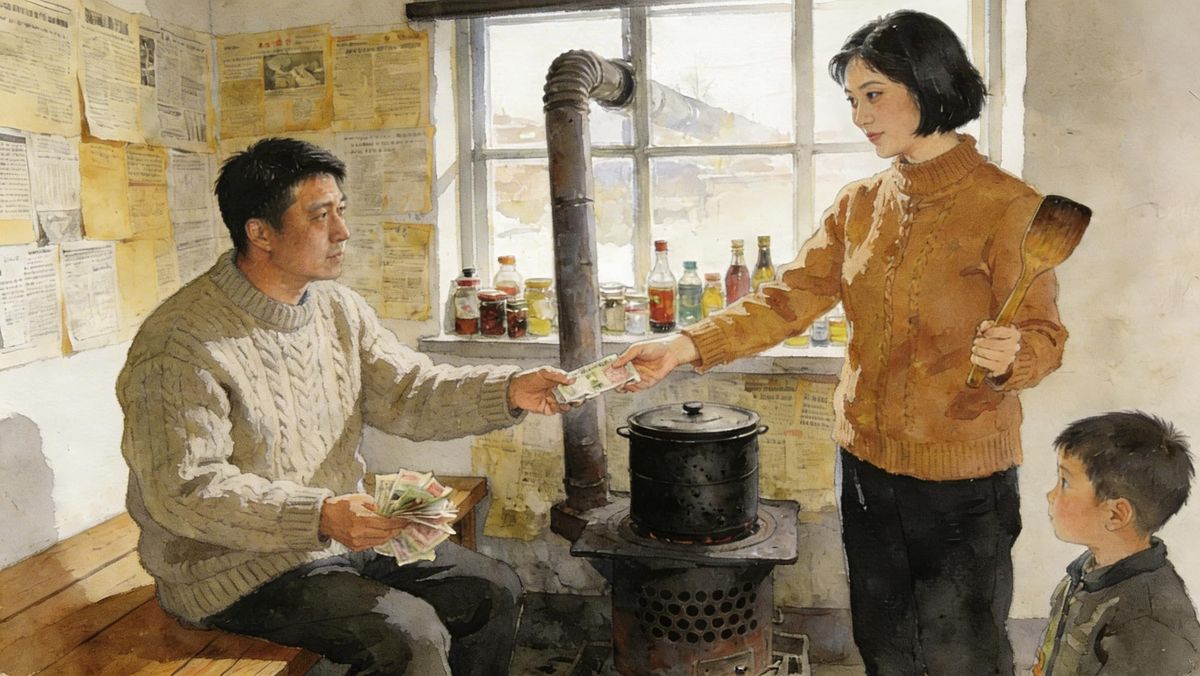
“What a whore!” As he stepped back inside, Little Mouse heard his mother curse.
“What did she talk about?” his father asked, taking all the cash he’d earned out of his pocket, stacking it into a neat pile, and handing it to his mother.
His mother paused, set down the spatula, and finally allowed a faint smile to surface. She took the money from his hand, then cast a kittenish glance at the man. “Of course she bragged all about her trip to Beijing, about how hard it was to get a visa to Hong Kong, and then asked me to feed her ‘prince.’” His mother, counting the bills, mimicked Aunt Song’s expression and posture. At last, the tension etched on her face eased—clearly, his mother was satisfied with the day’s takings, and Little Mouse, in turn, let out a breath of relief.
“Is Song still with that thug ‘Old Leopard’?” his father asked.
“I think so. ‘My boyfriend’… hmm, your ‘boyfriend’ has a wife!” his mother scoffed, tucking the cash into her pocket, then giving it two gentle pats, as if soothing a child that was never satisfied.
“At least she got her share of the factory. I heard Old Leopard gave her a stake when he privatized it with that Dong.” His father sat down on a stool for dinner.
“Earning all that money—for what? She’s in her forties and still no man will marry her!” his mother said, staring at the clock. “Children? Don’t even think about it. What good is all that money when a woman ends up like this?”
“People sneer at the poor, not at the whore!” his father said, looking over the dinner table. “No meat?”
“Do you know how much meat costs today? We can’t afford to eat meat at every meal. Tofu is just as tasty!” his mother declared unapologetically. “Did you get the buns?”
“What buns?” his father asked.
“You forgot!” his mother turned and raised her voice, gazing at Little Mouse. “We have nothing to eat because of you!” Her mood shift suddenly from tropical summer to arctic winter. Only then did he remember he had forgotten. He stood frozen, not daring to move, not knowing what to say.
“He’s been busy listening to some Taoist ramble on about superstitious bullshit!” his father added.
“We, the parents, feed you, clothe you, and pay for your schooling—you contribute nothing to this family. Yet you can’t even be bothered to remember something as small as this.” She always assumed the worst of Little Mouse, yet he had lost interest in justifying himself. “Do you know how much work I have to do every single day? I clean the house, do the laundry, cook for you, and still have to tend the stall to make money!” As his mother angrily ticked off her accusations on her fingers, his elder brother pushed the door open and came in, a bag of steamed buns in his hand.
“Oh, Gang-qiang, where did you go?” Taking the plastic bag, his mother asked with concern. She put the buns into the pot to reheat, then stuffed the plastic bag under Little Mouse’s bedding, making yet another dune—even a used crinkly bag might come in handy later, so it couldn’t be wasted.
“I went to hang out with a friend,” his brother replied.
“Hmm, as long as you’re not ‘learning something bad!’” his mother tried to reassure herself while placing the buns on a plate. “You sure you’re not ‘learning something bad?’”
Since the end of June, when middle school ended, Little Mouse’s brother Gang-qiang had been disappearing during the day and coming home at dawn. For a talentless teenager who had just finished compulsory education, he had nowhere to go: it was too early to sell his labor, and he was too young to strike out on his own or enlist.
There were very few job opportunities here. The decent ones depended entirely on personal connections and nepotism. The rest were either unsuitable or simply too grueling. And even if he left for a big city, there was no guarantee of a way forward: young, eager labor was oversupplied everywhere. Employers even had a slogan: “China never lacks human labor—if you won’t do it, plenty of others will.”
In this small place, the biggest pitfall for a boy his age was to “learn something bad,” which meant to “go astray”: hanging out with thugs, trying drugs, joining gangs, then fighting, stealing, robbing, and eventually going to jail—after which, by the rules of Chinese society, “life ruined.” His mother was worried, but there was nothing she could do. Education was the only decent way out of this small town, yet he had already been disqualified.
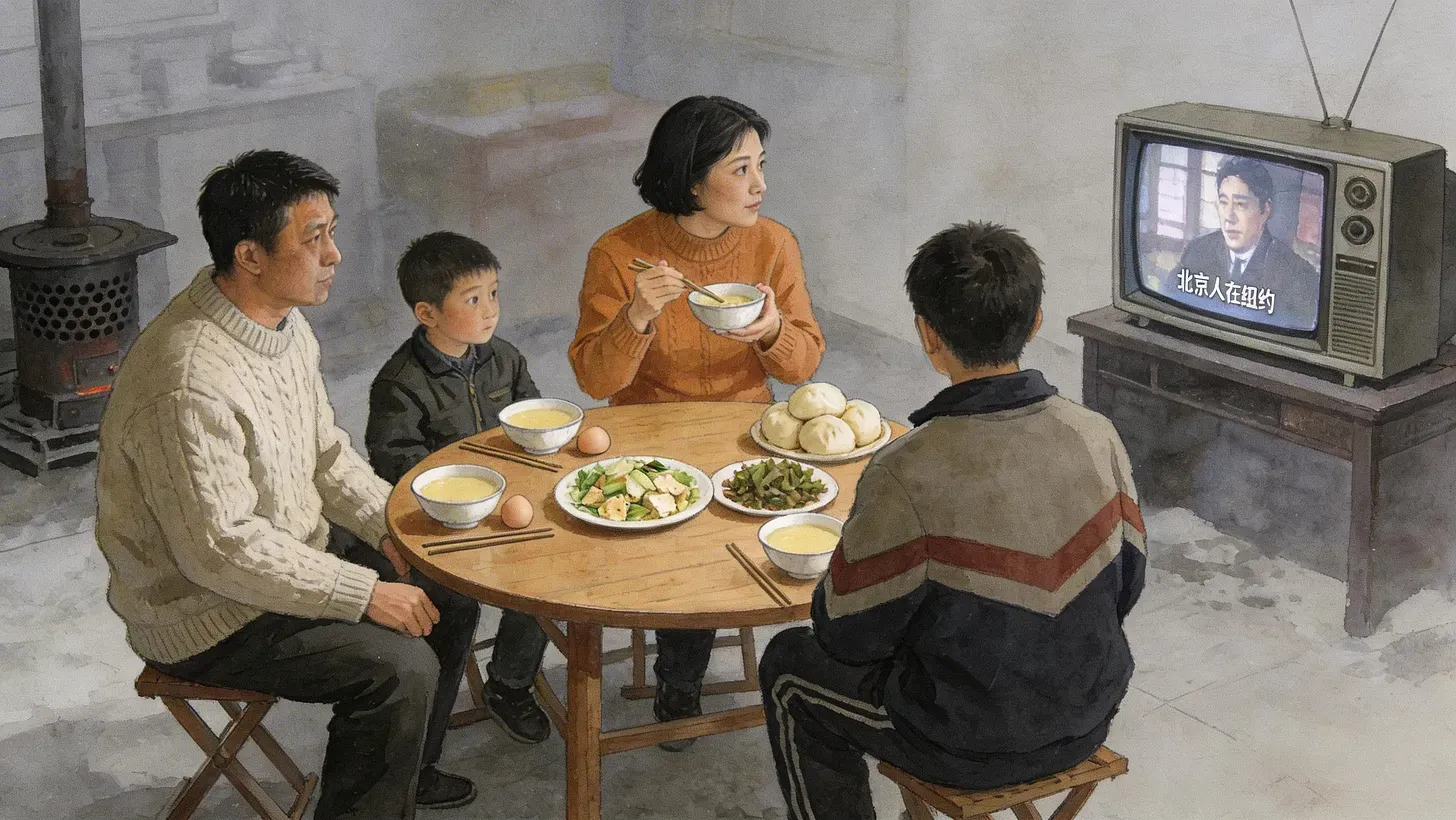
Finally, pulling over small stools, the whole family gathered around the table for dinner. On it were stir-fried napa cabbage with tofu, sliced mustard root dressed with sesame oil, millet porridge, and steamed buns. There were two eggs—one placed beside the father, the other beside Little Mouse.
Little Mouse had been hungry all afternoon, yet the sight of the food stirred no appetite at all: the tofu was burnt, the napa cabbage overcooked and limp, with so much liquid pooling at the bottom that the dish tasted watered down; the mustard root seemed to have been pickled for thousands of years, its saltiness exploding in the mouth like a barrage, and the faint trace of sesame oil tasted like a burial shroud attempting to smother every sense.
No one was allowed to complain. If anyone dared to say the food was not appetizing, the mother would immediately retort, “It’s good enough that I cook for you; it’s good enough that you have something ready to eat. When I was little, there was no food at all. You should feel grateful that someone went through all this work to feed you. If those poor kids in remote mountain villages had food like this, they’d be overjoyed—absolutely thrilled!”
The three men at the table could only force the food down in silence. His father and mother sat on opposite sides, like two stone statues facing each other. The upbeat, feel-good family commercials on TV brazenly clashed with the stagnant air in the room.
“Did Song say she was going to Hong Kong? What is she going there for?” his father finally found a topic to break the silence.
“She said she was going to see a show by some American singer,” his mother replied, chewing.
“Whose show? Is it Michael Jackson?” his brother was intrigued.
“Who knows who!” his mother dismissed, adding a piece of tofu to his bowl.
Then silence fell over the table again; his father and mother had nothing more to say. Little Mouse could not recall ever seeing his parents express affection. There were no hugs, no kisses, no physical touch whatsoever. Of course, they slept in the same bed, but like two revolutionary comrades rather than a loving couple. He even wondered whether he and his brother had truly been born to them, or simply picked out of dumpsters supposedly full of abandoned babies.
Their marriage was a brokered one, a common practice in this place: the only thing that mattered was the consent and approval of both families. The woman could marry into the city, where food supplies were secure and famine was no longer a concern; the man had a stable job, and by finding a rural woman of good standing who could bear children, the major milestones of life were considered accomplished. When they first met, through a matchmaker’s introduction, they sat together and talked for about thirty minutes. The second time they saw each other was at the wedding arranged to marry them.
While the family quietly ate, their eyes fixed on the television, the theme song for A Native of Beijing in New York, a highly popular Chinese TV drama in the 1990s, began to play at eight o’clock. At the episode’s beginning, two lines in Chinese characters appeared, like a couplet, a poem, or a prophecy:
If you love him, bring him to New York, for it’s heaven;
If you hate him, bring him to New York, for it’s hell.
Then the drama began: Wang landed in New York with his wife, Guo. Wang and Guo struggled to stay afloat as immigrants—he took a job washing dishes in the back of a restaurant, while she found work as a seamstress. These two once-privileged “Beijing Citizens” were living a hard life when they first arrived in America.
“You love me, I love you… it’s so disgusting!”—after Wang expressed his admiration for the restaurant’s boss lady, and Guo encountered a white man who showed interest in her—the mother in front of the TV could never approve of such romantic plots. When she was growing up, the only legally permitted entertainment was the “Eight Model Revolutionary Operas and Ballets”—all about revolution, patriotism, and the rejection of individual freedom. She had long opposed Chinese television’s constant airing of programs about America, especially this kind of love-and-kiss-riddled “American capitalist decadence,” worrying about its influence on children. In her youth, textbooks labeled the United States as “American imperialism” and portrayed it as an evil, ruthless war machine that disrupted global peace. What good could ever come from those American imperialists?
As the story unfolded, Wang got the hang of his job and Guo was promoted, and the two began to enjoy a stable life. His mother finally found something about America that she liked. “You should go to New York when grow up, study at that ‘cow university,’ then get a stable job in those bright offices— to make big U.S. dollars!” his mother said. “Just don’t ‘learn something bad.’” Though what counted as “bad” in America had yet to be settled. For Little Mouse, Beijing was remote enough; New York? That must be a world away!
While his mother finished speaking, a rat suddenly darted out of the inner room, scampered across the dining table, and ran under the wooden bench.
“Hurry, catch it! Kill it!” his mother jumped to her feet and yelled. His brother stood up to help, only to accidentally knock the table over; shattered tableware and spilled porridge scattered across the cement floor.
Smack—the father swung his hand and slapped his brother across the back. His brother said nothing, only quickly fetching a broom and dustpan to clean up.
Just then, the rat darted out again from beneath the bench and bolted toward the door. With half a leftover bun in his left hand, Little Mouse snatched up the small iron spade by the wall with his right and rushed out after it.
Passing a stack of napa cabbage, he chased it to the willow stump. The rat stopped and turned around, staring at him with its black eyes. The cold wind made him shudder. All at once, Little Mouse felt a pang of pity for it. He crouched down slowly and extended the leftover bun in his left hand onto the ground in front of it. The rat’s eyes flicked once, and then it darted into the darkness and was gone.
He slammed the iron spade onto the ground with a loud crash, then walked back inside.
“I tried to kill it, but it’s just too fast…” Little Mouse said.
“Always so careless! Now I have to spend money to buy more bowls!” his mother couldn’t stop blaming as she mopped the floor. His brother took the remaining tableware outside to wash.
“We should have a cat or a dog,” Little Mouse suggested strategically, “so it can catch rats.”
“So now I have to feed a pet on top of feeding you every day? Animals are dirty and annoying, and they cost money.” Money again. Little Mouse knew that when his mother brought up the magic word “money,” it was time to shut up.
Finally, his father finished tending the stove and walked into the inner room, while his brother curled up on the bench, staring at the television. “Go do your homework!” his mother ordered while clearing away the table and stools.
Little Mouse sat at the desk and turned on the lamp. He wanted to comfort his brother, but didn’t know how, and knew his brother wouldn’t appreciate it anyway.
The widely accepted parenting method in this place was “Spare the Rod, Spoil the Child.” When Little Mouse was very young, he witnessed his brother being beaten by their parents for various reasons: money going missing from the wallet, not showing enough respect to elders, and failing to achieve the desired exam scores…
Out of shared fear, the two brothers used to be close, but not anymore—especially after Little Mouse began to show extraordinary academic potential. The elder brother gradually came to realize that the second child his parents chose to keep rather than abort was, in effect, an open admission of “Project Failed, Operation Unsuccessful” on the first child. Of course, the public explanation was always, “My elder son might get lonely when he grows up, so we’re giving him a sibling as a companion,” when in fact, they simply wanted a second chance.
From the mother’s perspective, the younger son was a successful “second shot.” The pregnancy caught her off guard; her first instinct was to abort, given the “Fundamental National Policy.” However, after months of struggle, she decided to take another chance in the “kid lottery.” Now she was very glad about that decision: the second child never caused her any trouble, he excelled at school—she could finally hold her head high at parent meetings—and he didn’t cost much money. There is a Chinese saying that “some children are born to collect debts from their parents, while some are born to repay them.” This younger son, like a perfect investment with minimal input and maximum return, was clearly one who had come to repay.
End of Episode
Albert Aspen’s work is published simultaneously on this site and on his Substack page. If you prefer reading on Substack, please visit: Who is Albert Aspen?
Check out Albert Aspen’s Audiobooks on Spotify: Albert Aspen Audiobooks.